
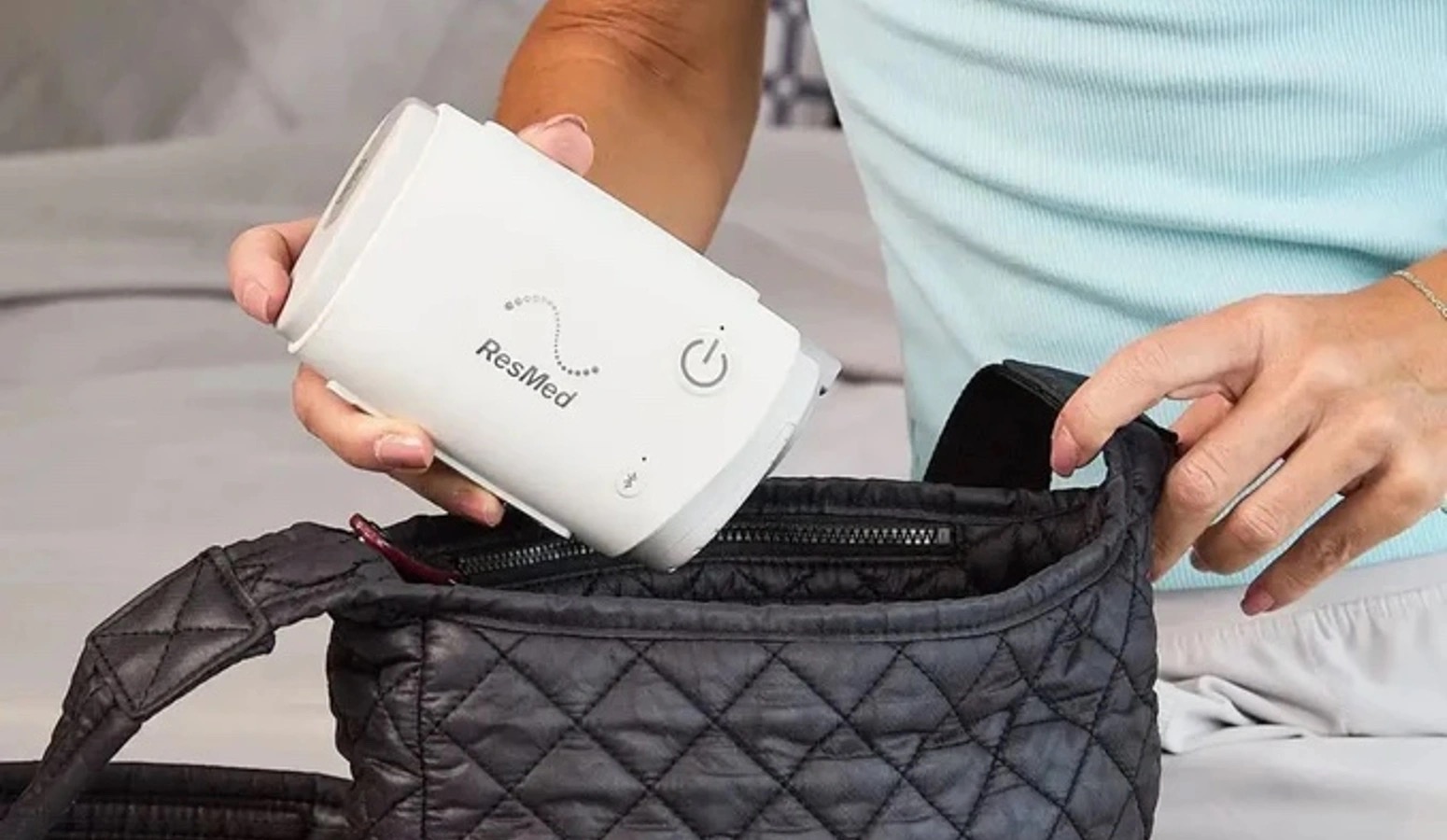
A travel CPAP machine lets you keep your sleep apnea therapy going wherever you go. You do not have to haul a bulky device through the airport. Many travel CPAP machines are smaller and lighter than a home unit.
However, the smallest option is not always the right one. This guide covers what to look for and how current models compare. It also shows how to pack so your therapy never skips a beat.
What Makes a Good Travel CPAP Machine?
Not every CPAP is built for the road. Good travel CPAP machines are compact and light. It should also fit in your carry-on without crowding out everything else. Check the weight and size the manufacturer lists, because small differences add up.
Next, look at the power supply. Many travel devices accept 100 to 240 volts, which suits most countries. You may still need a plug adapter for the outlet shape. Confirm the voltage on your power supply before you leave.
Noise matters too if you share a room. Compare the sound levels that manufacturers publish, and make sure you compare the same pressure settings. Then check how the device handles humidity, because that changes how comfortable your first night away feels.
You should also check whether the manufacturer states that the device meets FAA requirements for in-flight use. That statement is useful, but it is not the final word. Each airline sets its own policy, so confirm with your airline before you fly. If you are new to CPAP, learn about CPAP and BiPAP therapy options. That helps you understand which device type suits your prescription.
CPAP Battery Power: What You Need to Know
A CPAP battery can help on camping trips, long flights, and trips to places with unreliable power. However, battery support depends on your device. Some travel CPAP machines have no built-in battery. They need a compatible external battery that the manufacturer supports.
Runtime varies a great deal. It depends on the battery capacity, your pressure setting, and whether you use heated humidification. Heated humidifiers generally draw more power, so check the manufacturer’s guidance before you rely on battery power overnight. Always use the battery and cables approved for your device.
Air travel adds more rules. CATSA advises you to keep batteries in your carry-on bag and to check your airline’s policy. It also notes that batteries for portable medical devices, such as CPAP machines, may need airline approval.
Typically, airlines allow spare batteries up to 100 Wh in carry-on without special approval. Spare batteries between 101 Wh and 160 Wh need airline approval. Check the watt-hour rating printed on your battery before you travel.
Top Travel CPAP Machines of 2026 Compared
Several travel CPAP machines are available. The table below compares three devices using manufacturer specifications. Features, accessories, and availability change, so confirm the details with your clinician before you buy. Your prescription and mask also affect which device works for you.
| Device | Weight | Humidification | Battery | In-Flight Use | Good to Know |
|---|---|---|---|---|---|
| ResMed AirMini | 300 g | Waterless HumidX cartridge | No built-in battery. External power options are available. | ResMed states the device meets FAA requirements. Confirm your airline’s rules. | Works with ResMed mask setups designed for it. Offers CPAP and auto-CPAP modes. |
| Transcend Micro | About 220 g (0.48 lb) | Waterless heat and moisture exchanger | No built-in battery. The manufacturer sells a separate battery. | The manufacturer states FAA compliance and provides a compliance letter. Confirm your airline’s rules. | Works with most masks that have a standard 22 mm connection. |
| Löwenstein prisma SMART max | About 1.34 kg | Optional prismaAQUA heated humidifier, sold separately | No built-in battery. The manufacturer lists an external battery accessory. | The datasheet we reviewed does not state FAA compliance. Ask the manufacturer and your airline. | A full-size device that is heavier than dedicated travel models. |
The ResMed AirMini is a compact device. ResMed lists it at 300 g and 133 by 84 by 52 mm. Instead of a water chamber, it uses a HumidX cartridge. The cartridge helps retain heat and moisture from your own breath, so you do not need distilled water.
On paper, the Transcend Micro is lighter, at about 220 g. It also has no built-in battery. Instead, the manufacturer sells a separate battery that connects to the device.
How to Choose the Right One for You
The right choice among travel CPAP machines depends on how and where you travel. If you fly often, compare weight and the manufacturer’s in-flight statement. For camping, look closely at battery options. Additionally, decide whether you want waterless humidification or a heated humidifier for short trips.
Your prescription also matters. Some travel devices offer CPAP and auto-CPAP modes only, so they may not suit bilevel therapy. Therefore, confirm that a device can meet your prescribed pressure and mode before you buy. Your clinician can help you match a machine to your needs and check that your mask works with it.
Packing Smart: Travel CPAP Cases and Cleaners
A good travel CPAP case protects your device and keeps parts organized. Most travel CPAP machines come with a basic carry case. A padded bag is worth considering if you travel often. Look for compartments for your tubing, mask, power adapter, and any battery.
Cleaning on the road matters as much as cleaning at home. Follow the cleaning steps in your device and mask user guides. Manufacturers such as ResMed advise mild detergent and warm water.
Pack a small bottle of mild soap and a clean towel, and let each part air dry fully. Our guide on cleaning your CPAP equipment covers daily and weekly routines.
You may see portable cleaners that use ozone or UV light. However, these products are not proven replacements for manufacturer cleaning instructions. The U.S. FDA has said that the safety and effectiveness of these products for cleaning CPAP equipment is unknown.
ResMed’s limited warranty also excludes damage from ozone devices on machines sold on or after February 1, 2020. Therefore, stick with the washing steps in your user guide.
Finally, do not overlook your power adapter. Most travel CPAP machines include a power supply that accepts 100 to 240 volts. However, you may still need a plug adapter for the countries you visit. A missing adapter can cut your therapy short, so pack a spare.
Frequently Asked Questions About Travel CPAP Machines
Can I bring a travel CPAP on a plane?
Yes. CATSA allows CPAP machines in carry-on baggage. At security, you may need to place the main unit in a bin for screening. CT scanner lines are the exception. Airlines set their own rules for carry-on limits and in-flight use, so check with your airline before you fly.
Do I need a special CPAP for travel, or can I use my regular machine?
You can often use your regular CPAP if its power supply accepts the voltage at your destination. Check the label first. A travel CPAP machine is smaller and lighter, which helps on trips with limited luggage space. Ask your clinician which option suits your prescription and travel habits.
How long does a CPAP battery last?
Battery runtime depends on the battery capacity, your pressure setting, and whether you use heated humidification. No single number applies to every device. Check the runtime estimate in the manufacturer’s guide for your device and battery. Also confirm that the battery meets your airline’s watt-hour rules before you fly.
Which travel CPAP machine should I choose?
The best choice depends on your prescription, your mask, and how you travel. Compare weight, humidification, power options, and the manufacturer’s in-flight statement. For example, the ResMed AirMini and the Transcend Micro are both compact devices without a built-in battery. However, they differ in mask compatibility and battery accessories.
Should I use a portable CPAP cleaner when I travel?
Start with the cleaning instructions from your device manufacturer. Most call for mild soap and warm water. Ozone and UV cleaners are not established as safe or effective replacements for washing. You should not treat them as an add-on either. Ask your clinician or device manufacturer if you have questions.
Travel Well and Sleep Better
Travel CPAP machines help you keep your therapy on track during trips. Compare weight, humidification, mask compatibility, and power options before you choose. Then confirm battery and in-flight rules with your airline. Pack your cleaning supplies and a spare plug adapter as well.
Explore the full range of CPAP machines available at InspiAIR to find a fit for your travels. You can also contact our team for personalized support.

