
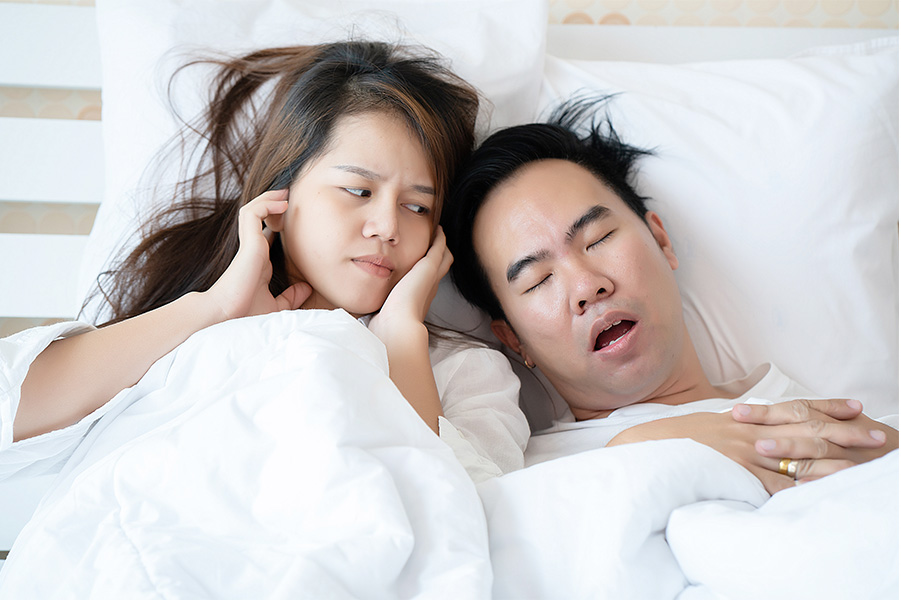
If you wake up exhausted, snore loudly, or your doctor has mentioned sleep apnea, getting tested is the right next step. Most people then face one question: should you go to a clinic overnight, or can you test at home? When it comes to a sleep study vs home sleep test, the honest answer is that it depends on your situation. Neither option is better for everyone.
This guide explains what each test involves and who each one suits. It also covers how funding works in Ontario, so you can choose the right path with confidence.
What Happens During an In-Lab Sleep Study?
An in-lab sleep study, also called polysomnography, takes place overnight at a sleep clinic. First, a technician places sensors on your body. These sensors track your brain activity, breathing patterns, blood oxygen levels, heart rate, and body movements. They also record the different stages of sleep you move through during the night.
The setup sounds more involved than it really is. In fact, most people fall asleep faster than they expect. The data gives clinicians a detailed picture of your sleep. For example, it shows whether you stop breathing, how often it happens, how long each pause lasts, and whether other conditions play a role.
When an In-Lab Study Is the Better Choice
An in-lab study is the gold standard for complex cases. Your doctor will usually recommend this route if your symptoms are unclear or if you have heart or lung issues. It is also the next step when a previous test came back inconclusive.
Most importantly, Ontario requires an in-lab sleep study for Assistive Devices Program (ADP) funding. In other words, you need this test to qualify for ADP funding toward your CPAP machine.
What Is a Home Sleep Test?
A home sleep test (HST) uses a portable monitor that you pick up, use in your own bed, and return the next day. It measures airflow, breathing effort, blood oxygen saturation, and heart rate. Together, these are the core signals needed to identify obstructive sleep apnea (OSA).
However, a home test does not capture everything a lab study does. It does not track brain activity or sleep stages. As a result, it is less suited to finding less common sleep disorders.
How Home Tests Fit Into Ontario Care
Your primary care provider may prescribe a home sleep test to screen for OSA before an in-lab sleep study. That said, keep one key limit in mind. Home sleep tests are not eligible for ADP funding for a CPAP machine.
In-Lab Sleep Study vs Home Sleep Test at a Glance
| In-Lab Sleep Study | Home Sleep Test | |
|---|---|---|
| Where it happens | Overnight at a sleep clinic | In your own bed |
| What it measures | Brain activity, breathing, blood oxygen, heart rate, body movements, and sleep stages | Airflow, breathing effort, blood oxygen, and heart rate |
| Detects other sleep disorders | Yes | Limited |
| Best for | Complex cases, unclear symptoms, heart or lung issues, or inconclusive past results | Screening for obstructive sleep apnea |
| ADP funding for a CPAP machine | Eligible | Not eligible |
How the Testing Process Works
The process follows the same basic steps for most patients. First, you have a consultation or screening, where a clinician reviews your symptoms and medical history. Next, you complete the test itself. Then a qualified respiratory professional reviews the data. Finally, you get your results and a conversation about what they mean and whether you need treatment.
InspiAIR’s respiratory specialists walk patients through this entire process. To learn more, visit our page on sleep studies and funding in Ontario, including what is typically covered.
After the Test: What Comes Next
If your results point to obstructive sleep apnea, CPAP therapy is the most common treatment. For most people, it makes a meaningful difference fairly quickly. Benefits include better sleep, less fatigue, and lower cardiovascular risk over time.
Choosing the Right CPAP Machine
Choosing a CPAP machine is its own decision, so do not rush it. For example, the ResMed AirSense 11 is one of the most popular options. It adjusts pressure automatically through the night and has a built-in humidifier. The machine also connects to an app, so your respiratory therapist can check your therapy data remotely.
Still, the right fit depends on your prescription, your mask preferences, and how you sleep. InspiAIR’s team helps patients through that selection process. Before your follow-up appointment, you can explore CPAP and BiPAP therapy options or browse available CPAP machines.
Getting Tested in Ontario
InspiAIR has clinic locations across southern and central Ontario, from Toronto and Ottawa to Kingston, Barrie, Mississauga, and beyond. For patients in Northern Ontario, our sister brand Northern Respiratory serves Sudbury, Thunder Bay, North Bay, Sault Ste. Marie, and Kenora.
If you think you might have sleep apnea, the sooner you know, the sooner you can act. Contact us to find a location near you, or ask your physician to submit a referral. From there, we can usually move quickly.
Frequently Asked Questions
Is a home sleep test as accurate as a lab study for sleep apnea?
For diagnosing obstructive sleep apnea specifically, yes. Clinicians widely use home tests for that purpose, and the tests are well validated. However, they are less useful for detecting other sleep disorders. That is why your medical history helps decide which test your doctor recommends.
How long does it take to get results?
This varies by clinic. Your InspiAIR team can tell you what to expect for your specific test.
Does OHIP cover sleep studies in Ontario?
Coverage depends on your referral and the type of test. For CPAP equipment, Ontario’s Assistive Devices Program (ADP) covers a portion of the machine cost when you have an in-lab sleep study. Our team can also walk you through what is typically covered and what to ask your doctor.
What if I already know I snore? Do I still need a test?
Yes, because snoring alone does not confirm sleep apnea. A test shows whether your airway actually blocks during sleep, how severe it is, and whether you need treatment. If snoring is your main concern, read more about snoring causes and when to get evaluated.

